Hexiwords
Second Gear GamesWord
4.839.00 Reviews
- Version
- 1.0.2
- Installs
- 10.00K
- Age Rating
- Everyone
Screenshots
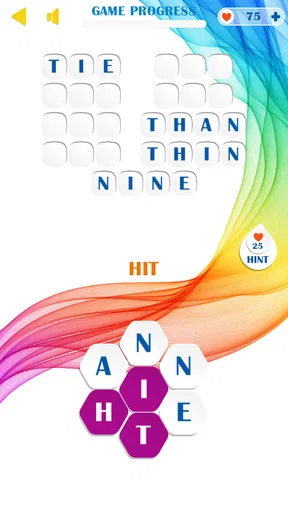
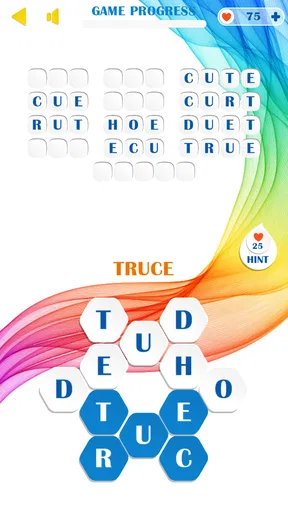
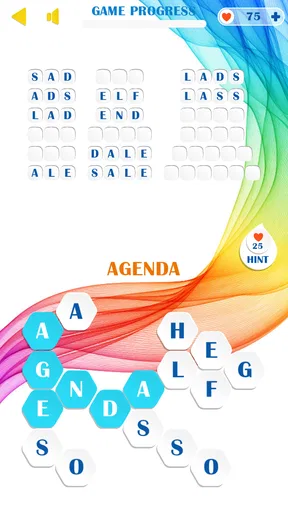
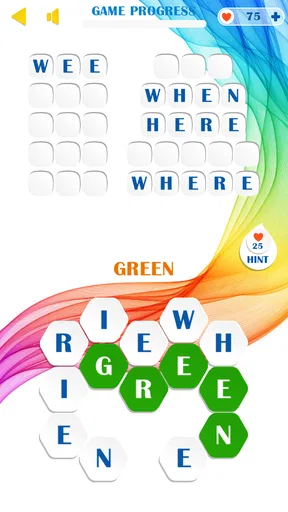
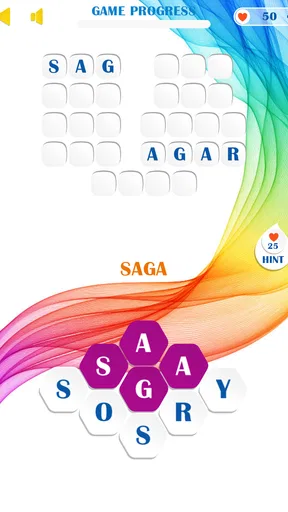
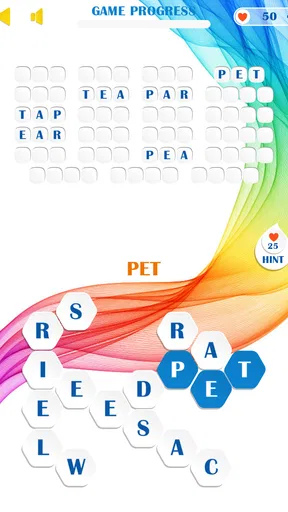
Our Review of Hexiwords
 Analysis by Appyee
I found Hexiwords easy to understand within a few moments, but not so simple that it becomes disposable after one short session. It is a free word game from Second Gear Games built around connecting letters to uncover hidden words. That basic idea makes it a comfortable choice when I want a quiet mental break rather than a fast arcade challenge or a long story-driven adventure.
The game is listed in the word category, and that description fits its appeal well. You look at the available letters, search for possible combinations, and gradually work toward completing the puzzle. The satisfying part is not just finding an obvious word; it is noticing a less visible possibility after the board has made you rethink the letters in front of you. For a first-time player, that creates a reassuring path from installation to a small but meaningful success.
I would recommend it most readily to people who enjoy word searches, anagram-style puzzles, and short sessions that can be paused without losing the point of playing. It is also suitable for a broad audience because its content rating is Everyone. At the same time, anyone looking for competitive multiplayer, a large adventure, or a highly animated presentation should set expectations differently. This is a focused vocabulary puzzle, not an all-purpose game.
Getting started and finding your first words
I start by treating the opening puzzle as a chance to learn how its letters fit together, not as a race to clear the board. Finding one plausible word is enough to make the rest feel more approachable; from there, I can scan what remains with a little more confidence. Once that first foothold is in place, the next section looks at how to build a steady routine without turning each puzzle into guesswork.
What the opening experience feels like
After installing the game, I would approach the first puzzle without trying to solve everything at once. The most useful first step is to scan the letters for familiar short words. That gives you a foothold and helps you understand how the puzzle expects you to connect the available characters. Instead of treating the board as a test of instant brilliance, treat it as a small search space that becomes clearer with each discovery.
The store summary describes the central action plainly: connect letters and find hidden words. The important detail in practice is that the game rewards observation more than speed. I did not need to rush through the opening. A calm scan, followed by trying likely combinations, is a better approach than tapping randomly and hoping the answer appears.
For a new player, the first successful action should be deliberately modest. Find one word that looks obvious, connect it, and use the remaining letters as a fresh problem. That first completion matters because it changes the way the board reads. Letters that looked unrelated begin to suggest patterns, and the puzzle feels less like a wall of symbols and more like a collection of clues.
A practical routine for the first few puzzles
My preferred routine is to begin with common word endings and beginnings rather than staring at every possible combination. If a group of letters suggests a familiar word, test that path first. Then look at what remains instead of repeatedly returning to the entire board. This reduces visual clutter and makes it easier to notice a word that was hidden behind the first answer.
A second useful habit is to change direction when a promising combination stops making sense. Players often waste time because they become attached to one imagined answer. In this game, abandoning an almost-word is productive. The letters may be intended to lead your attention toward a different arrangement, and a short reset can reveal it faster than repeated guessing.
I also suggest playing the first session somewhere without too many interruptions. The puzzles are suitable for brief breaks, but the best early impression comes from giving each board enough attention to recognize its patterns. Once the basic interaction feels natural, it becomes easy to return for a quick round while waiting for an appointment, taking a break from work, or relaxing before bed.
How to handle a puzzle that does not open up
When I get stuck, I do not immediately assume that I have missed a complicated word. I first check the simple possibilities again, especially words that might have been overlooked because they seemed too ordinary. Then I mentally group the letters by possible starts, endings, or familiar combinations. This is a better use of time than repeatedly trying the same sequence.
Another effective tactic is to look away briefly and return to the puzzle. Word games often create a narrow focus in which the same incorrect answer keeps appearing convincing. A short pause breaks that loop. If you are playing on a phone, even switching your attention to something else for a minute can make the remaining letters look different when you come back.
This is one of the game’s strengths and one of its limitations. The challenge can feel pleasantly thoughtful when you want a gentle brain exercise, but a player who expects constant hints or a very guided experience may find the uncertainty frustrating. The game is most enjoyable when you are comfortable experimenting before seeking a solution.
Common confusion about the word search
The phrase “hidden words” can make a new player expect a traditional word-search grid with a fixed list of terms to locate. That is not how I would frame the experience. The central activity is connecting letters to discover the words suggested by the puzzle, so the useful mindset is closer to solving an arrangement than scanning a page for a visibly printed answer.
It is also easy to assume that the longest possible word must be the most valuable move. I found that this can distract from the structure of the board. A shorter discovery may reveal how the remaining letters are intended to work together. In other words, do not judge a move only by length. Judge it by whether it helps you understand the puzzle.
New players may also hesitate because they think every attempt must be perfect. I would not play with that pressure. The value of the early puzzles is partly instructional: they teach you to inspect letter relationships, recognize likely word shapes, and recover from a wrong guess. The game becomes more comfortable once you see failed attempts as part of the search rather than as a sign that you are playing badly.
Where it fits among other word games
Compared with a crossword, this feels more immediate because you are working directly from letters rather than reading a full set of written clues. Compared with a traditional word-search puzzle, it asks for more active construction and less visual scanning. Compared with a daily guessing game, it is less dependent on a single answer and more focused on gradually uncovering the possibilities within the current puzzle.
That difference matters when choosing what to play. If you enjoy crosswords because of their general-knowledge clues, this may feel too narrowly letter-based. If you prefer a quick word challenge without a large page of clues, its compact format is more appealing. I would choose this game for a quiet, repeatable puzzle session, while choosing a crossword when I want broader trivia and a more elaborate clue-solving process.
The game also avoids the pressure that comes with a public score or a daily streak, at least in the way I approached it. That makes it friendlier for casual players who do not want another routine demanding attention every day. The trade-off is that players motivated by competition may find the experience less compelling than a word game built around rankings, timed rounds, or social comparison.
Useful habits beyond the first session
One non-obvious benefit is that the game can serve as a small vocabulary warm-up. I would not treat it as a formal language course, but searching for words encourages you to notice prefixes, suffixes, and familiar letter groupings. Players who are learning English may find that process useful, although the game should complement deliberate study rather than replace it.
A second practical use is mood-based play. When I have only a few minutes and do not want the mental commitment of a long game, a word puzzle gives me a clear beginning and end. It is especially suitable for a low-noise break because the core satisfaction comes from recognition and deduction, not from rapid visual effects or constant action.
A third insight is that the game works better when you separate discovery from verification. First generate several possible words without judging them too harshly. Then test them against the available letters and the puzzle’s structure. This two-stage approach prevents the common mistake of rejecting a useful idea simply because it did not appear instantly.
Who should try it, and who should skip it
I think it is a strong match for casual word-game players, people who like anagrams, and anyone who wants a compact puzzle that can fit around ordinary routines. Families can also approach it comfortably because the age rating is Everyone. The free entry point makes it easy to try without committing money before you know whether the letter-connection format suits you.
I would be more cautious about recommending it to players who need extensive explanations, story progression, or a constant stream of new mechanics. The appeal comes from refining one central idea, not from switching between several types of gameplay. If you quickly lose interest when a game stays focused on word discovery, another genre will probably serve you better.
It may also be a poor choice for someone who wants a completely relaxing experience with no moments of uncertainty. Word puzzles naturally create pauses where the answer does not come immediately. Here, that pause is part of the design’s appeal, but it can still feel like friction if you prefer games that always tell you exactly what to do next.
Cost, version, and device expectations
Hexiwords is free to download, with in-app purchases ranging from $1.99 to $19.99 per item. That makes the initial decision straightforward: install it, play enough to understand the letter puzzles, and decide for yourself whether any optional purchase fits your habits. I would not buy anything immediately. The first meaningful test is whether you enjoy the basic search process without needing extra motivation.
The game has an average rating of 4.8 from around 392 ratings, with around 39 written reviews, and it has passed 10K+ installs. Those figures suggest that the focused concept has found an appreciative audience, though they should not replace your own trial. Word-game preferences are personal: a high rating does not guarantee that its pace will match what you want from a mobile game.
It was released on Jul 5, 2022, and the current version is 1.0.2. The listed minimum operating-system requirement is Android 5.0. That is useful for people using an older Android phone, although the smoothness of any game can still depend on the particular device and its condition. On a compatible phone, the concept should be easy to evaluate quickly because the first puzzle teaches the core interaction directly.
A realistic everyday scenario
Imagine that I have ten minutes before leaving for an appointment. I open the game, solve the most approachable part of the current puzzle, and stop when I need to go. That works better for me than starting a story game that expects a longer uninterrupted session. Later, I can return with the same problem in mind and continue searching without having to remember a complicated plot or control system.
Another scenario is a quiet evening when I want something more active than scrolling but less demanding than a competitive match. I can work through a few letter connections, pause when my attention fades, and come back later. The game gives that time a small sense of purpose without turning relaxation into a performance.
For parents, the Everyone rating makes the game easier to consider for shared casual play, but I would still guide a younger player through the first puzzle. The challenge is language-based, so enjoyment may depend on reading ability and vocabulary familiarity. An adult and child could take turns suggesting possible words, turning the search into a cooperative conversation rather than a solitary test.
The next step after learning the basics
Once the first successful discoveries feel natural, I would stop trying to solve every puzzle in the same way. Use a fast scan when the letters look familiar, but switch to a slower grouping method when the board feels resistant. The ability to change approach is more valuable than memorizing one trick, because word puzzles often hide their useful pattern in a different place than you expect.
I would also keep sessions short at first. Playing until frustration sets in can make a thoughtful puzzle feel harsher than it is. Ending after a satisfying discovery leaves you with a clear sense of progress and makes it easier to return. If you are using the game as a break, that boundary is especially helpful.
My final view is that Hexiwords succeeds because it keeps its promise narrow and understandable. It gives me a direct way to connect letters, search for words, and enjoy the small reward of seeing a puzzle become clearer. Its limitations are equally clear: it will not satisfy players seeking action, narrative, or deep variety, and moments of being stuck are unavoidable. For anyone who likes word puzzles and wants a free, approachable place to start, I think it is worth trying. The best first goal is simple: solve one word, notice what it teaches you about the remaining letters, and let that discovery guide the next move.
Verdict
Strengths of Hexiwords
- Simple rules make it easy to start playing immediately.
- Hexagonal boards add a fresh twist to traditional word puzzles.
- Short rounds fit well into quick breaks or commutes.
- Word challenges can help improve vocabulary and spelling skills.
- Clean presentation keeps the focus on solving each puzzle.
Limitations of Hexiwords
- Some puzzles may feel repetitive after extended play sessions.
- Difficulty can vary noticeably between individual challenges.
- Players seeking action or fast-paced gameplay may find it too slow.
- A limited word database could make advanced rounds predictable.
- Hints or extra features may be restricted without optional purchases.
Other Releases by Second Gear Games
View All
Words in Color
Word4.4
Similar Picks in This Category
View All
Word Search - Word Puzzle Game
Bluetile4.8

Word Search Quest - Puzzles
Blackout Lab4.8

CodyCross: Crossword Puzzles
Fanatee, Inc.4.7

Words of Wonders: Crossword
Fugo Games4.9

Wordscapes: Word puzzle game
PeopleFun4.7

Word Search Explorer
PlaySimple Games4.9
Frequently Asked Questions
What is Hexiwords and how does the game work?
Hexiwords is a word puzzle game built around a honeycomb-style grid of connected letter tiles. The main objective is to form valid words by linking neighboring letters, usually while trying to complete a specific challenge or achieve the highest possible score. Its rules are easy to understand, but finding longer words and planning efficient paths gives the game more depth as you progress.
Is Hexiwords suitable for beginners and experienced word-game players?
Yes. Hexiwords is accessible to beginners because the basic gameplay is simple and the interface is generally easy to learn after a few rounds. At the same time, experienced word-game players can enjoy the challenge of discovering uncommon combinations, improving their speed, and solving boards more efficiently. The difficulty may increase as puzzles become less predictable and require more careful thinking.
Does Hexiwords require an internet connection to play?
Hexiwords may support offline play for at least some of its puzzle content, which makes it convenient for travel, commuting, or situations without reliable mobile data. However, features such as advertisements, online rankings, cloud synchronization, updates, or certain daily challenges may require an internet connection. Availability can also vary between Android and iOS versions, so check the app listing before downloading.
Is Hexiwords free to download, and are there in-app purchases or advertisements?
Hexiwords is generally presented as a free-to-download word game, but the exact monetization model can depend on the platform and version. Free gameplay may be supported by advertisements, while optional purchases could provide hints, remove ads, or unlock additional content. Before installing, review the Google Play or App Store listing to confirm current pricing, in-app purchase options, and any subscription terms.
What permissions and device requirements does Hexiwords have?
As a puzzle game, Hexiwords should not normally need extensive permissions beyond those required for basic operation, advertising, analytics, or notifications. Compatibility depends on your device’s operating system version, available storage, and screen configuration. It is best to download the official version from Google Play or the App Store, review the displayed permissions, and keep the system updated for the smoothest experience.
Play our best games!


